Aristotle, which also under the title of The Nine Lives of Aristotle, is a book by Dick King-Smith about an accident prone cat aimed at the middle primary audience. His owner, a witch named Bella Donna, spends most of her time cleaning up after his misadventures whilst counting down his nine lives.Her cottage is proving to be a risky sort of place for an adventurous kitten. Tall trees, streams, railway tracks, and roads are among the dangers which Aristotle seems to find very quickly. As much as Bella Donna tries to keep him safe, Aristotle's lives are fast running out. Then there is the episode with Old Gripper with the studded collar... The gently drawn illustrations by Bob Graham closely match the text and provide the reader with extra insight into the near misses of both Aristotle and the efforts of his hardworking owner.
This blog contains reviews and comments on children's books which I own, have read, and would like to share. I look for books at markets and opportunity shops. They are cleaned up, covered and read. Then I take them to the classroom for students to read. Students can borrow the books at any time. Many books are also from my personal library, especially the Youth Fiction. Students can preview some of them on this blog. Now, I am also on the lookout for great new releases for my grandson Archie.
Saturday, January 18, 2014
The Tin-Pot Foreign General and the Old Iron Woman by Raymond Briggs
This book tells the story of the Falklands War in the format of a picture book which I would use with middle or upper primary students. The style is simplistic with the text being accompanied by bold, and vivid illustrations. Whilst neither The Falkland Islands (Las Malvinas), or the waring countries of Britain or Argentina are mentioned in the text, their leaders, Margaret Thatcher and Argentine dictator, General Leopoldo Galtieri are presented as a pair of metal giants who send troops to fight over the "sad little island" which is inhabited by shepherds who eat nothing but mutton. In the text the old woman who is "not real" but made of iron, alludes to Maggie Thatcher's nickname as "the Iron Lady" which derives from Thatcher's nickname "The Iron Lady", while the General who is also "not real and made of tin pots"alludes to the term "tin-pot general" (another word for an autocrat.) The book shows how soldiers from both sides were killed or maimed. These are the "real men" The pictures portraying these men are drawn in monochrome pencil sketches as opposed to the full-colour "loud" caricatures of the wearing leaders which dominate the other pages. After the victory by the soldiers of the Old Iron Woman, there are numerous celebrations, to which the maimed are not invited because the reality and disturbing nature of their injuries "would spoil the rejoicing. The stubborn refusal of both sides to accept responsibility for the civilian casualties is mocked with statement that three of the islanders were killed, but that "nobody was to blame". I am proud to add this great book to my Raymond Briggs collection. The follow clip of this guy reading the book is worth a watch.
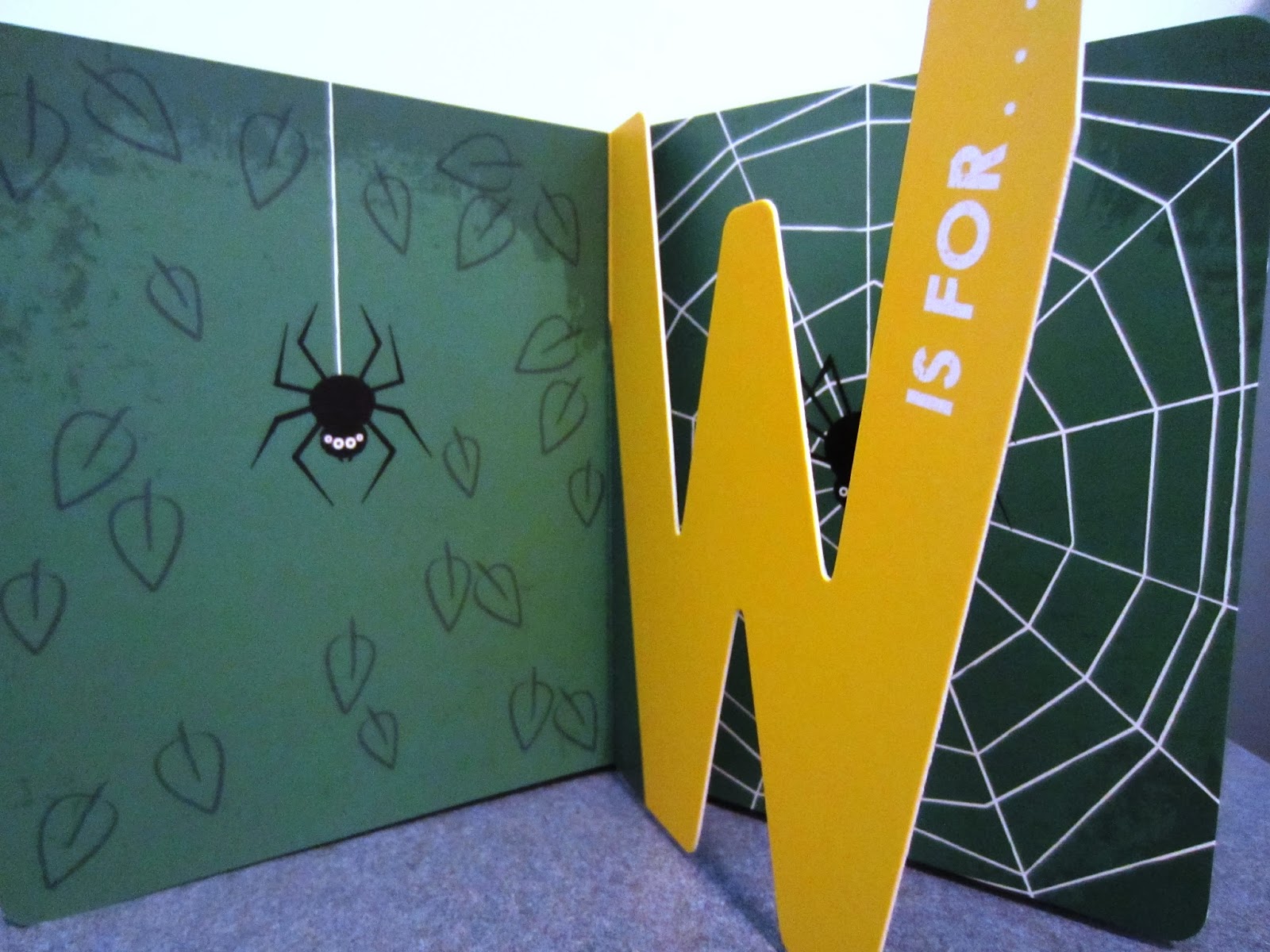
Alphablock by Christopher Franceschelli
This sturdy board alphabet book by publisher Christopher Franceschelli is a great way to introduce the alphabet to your youngster. It will withstand the hands of a one to four year olds and will fit nicely into their inquisitive little hands. It is brightly illustrated with artwork by Peskimo. The three dimensional aspect of this book combined with its vivid colours ensures you want to keep turning the pages, as will your child. It has thick pages cut into the shape of each letter and parents and children will enjoy this peek-through guessing game around the letter form itself. I bought this book for my grandson Archie's first birthday and instinctively know he will love it and be happy to visit it again and again. Each letter leaps from the spread and has a beautiful illustration behind it which finished off the picture on the preceding page. I love it.
Monday, November 4, 2013
Mrs Pepperpot's Outing by Alf Prøysen
This is the first Alf Prøysen book I have ever read and it was a delightful read, nothing deep, stories about a little lady who shrinks at the least inopportune moments, and whose clothes intriguingly enough shrink with her which is very convenient. The Norwegian author, Alf Prøysen, was born back in 1914 and sadly only lived to be fifty-six. He was well known for his children's books as well his contributions to the music and television industries. Mrs Pepperpot, the protagonist, lives with her husband Mr Pepperpot on a hillside in Norway. The main story in this book revolves around a car ride with Mr Pepperpot searching for some interesting activities in which to partake. Whilst he is muddling through these, Mrs Pepperpot is busy collecting stray animals, all of whom rescue her during her shrinking episodes. The stories don't require a great deal of brain power to decode, but they are intriguing and obscure enough to keep you reading. To my way of thinking, students who enjoy the adventures of Pipi Longstocking and Enid Blyton books, may well find the Pepperpot series of interest.
Wednesday, October 9, 2013
Onion Tears by Diana Kidd
I have now read quite a few of Diana Kidd's novels and it is a shame she is no longer around to continue sharing cultural insights in order to break down stereotypes which often dehumanise refugees. This book is a beautiful vehicle for teaching children values-based education in relation to asylum seekers and refugees. Although it was written some twenty-four years ago, it is still extremely relevant to the situation in Australia today. The thoughts of a young Vietnamese girl Nam-Huong, who has been through a trauma that has left her unable to speak, are eloquently conveyed to the reader through the first person narration. Nam lives with "Aunty" and helps out in the family restaurant (along with fellow refugee Chu Minh) when she is not attending school. Insight into what she suffered and her loneliness and disconnectedness are conveyed through a number of letters which Nam writes to the "Dear little yellow canary," "Dear Mr Buffalo" and other animals with who she had a connection in her past life. At school she is teased because of her name, the food she brings to eat and the fact she doesn't verbalise what she is feeling. The students have no understanding of her grief for her missing family and her beloved Grandpa whose fate is revealed only at the end of the story. It is only her understanding teacher, Miss Lily, who eventually helps Nam to start enjoying her new life and to smile again.Whilst some younger readers will be unable to relate to the atrocities Nam endured in Vietnam and during the boat trip, they will understand how difficult it can be to start life in a new country and how being dismissed, teased and excluded can affect a person's well being. Onion Tears was shortlisted in the 1990 Children's Book of the Year awards and winner of the 1990 Victorian Premier's Literary Award for Children's Literature. It was inspired by the stories of Southeast Asian students at Richmond Girls High School. I have reviewed a few books by this author on this blog. The detailed ink illustrations by Dee Huxley which adorn all the pages add greatly to the pathos of Nam's story.
![]() |
| The soldiers took Dad away..Nam and little yellow canary |
Monday, October 7, 2013
The Tartan Kangaroo by Tom Lewis and Tony Oliver
Australia meets Scotland, this book is basically an illustrated poem, written in ballad form. Mind you, the illustrations by Tony Oliver, are absolutely amazing, especially the massive tartan, bagpipe-playing kangaroo. This kangaroo is an environmental disaster of earthquake proportions who rips up gum trees and flings them around awakening the townsfolk in the middle of the night with his merry bagpipe tunes. Well, the time happens when there's bound to be a few complaints. Then, there's the bright idea of using the eccentric roo to attract tourists. What happens in the end is not what you might expect!
Say Cheese by Mary Blakeslee
This is definitely a girly book and focuses on the issues of fitting into a new school, friendships and peer pressure. Fifteen year old Granada (Granny) has just returned to Canada to attend Fineacre High after many years of studying at an exclusive school in Switzerland. She initially has trouble settling in, and is faced with further trouble when she sets her sights on Steve Williams, the editor of the school newspaper Fi High Speaker, and who is under the constant watch of his girlfriend of three years, Lonnie Kaye Borgnine. Granny is so infatuated with Steve that she lies about her photography skills to gain a place on the newspaper. There are a few fiascos to start off with, but after spending many hours studying the art of photography with her father who is renown for his accomplished photojournalism, she starts to gain Steve's appreciation and attention. Gary, the guy in charge of the photography section, is not so easily impressed, and like Kaye, it seems he is out to make her life miserable. Thank goodness for her new friend Maureen who is there to offer advice, and support her through the tricky situations. On the home front, Granny is trying to develop a relationship with her new step mother Judy and help out with the energetic five year old twins Trixie and Trina. Judy firmly believes they are destined to be great child models.
Labels:
Gary,
Granada,
Granny,
Jay Leach,
Judy,
Lonnie,
Mary Blakeslee,
Maureen,
photography,
Say Cheese,
school life,
Steve,
Trina,
Trixie
Subscribe to:
Posts (Atom)